Showing posts with label Taxes. Show all posts

Monday, November 13, 2017

Paying at the Pump

I don’t want to see the economy collapse. I am not even wishing for a mild recession. But I watch as Wall Street continues to celebrate the Trump presidency, and I know this can not end well. I once worked as a financial advisor for Morgan Stanley. There are many reasons why it did not work out for me, but one was the toxic political environment I found there. There was a near religious belief in Republican policy prescriptions, despite the fact that the market had ultimately fallen in every Republican administration, and risen in every Democratic one, since World War II. That was in 2001, but even though it remains true today, Wall Street does not seem to have learned anything from this streak. I have talked about the reason for this disconnect before: the market is not the economy. Supporters of Donald Trump like to point to the Wall Street rally under his rule so far as evidence that the Republicans got it right this time, so let’s take a look at why the market, and corporate profits, are doing so well, and why that might not continue. I am not an economist, so I am going to focus on something most people aren’t talking about yet: the price of oil.

The price of oil is something anyone can see for themselves at the gas pump. It has a great impact on consumer spending. Far away from Wall Street or Capitol Hill, most Americans live from paycheck to paycheck, so more expensive oil means we must cut costs elsewhere in order to afford fill our tanks. When gas prices jump, there is a period of denial, in which Americans increase borrowing to make up the difference. We are in such a period now, but borrowing has its limits, so gas prices must come back down soon if consumer spending is to remain unaffected. Even now, Wall Street is being surprised by earnings reports in the retail sector. There are some exceptions, but the story these earnings reports are trying to tell is that Americans are downshifting their spending, so McDonalds and WalMart are doing well, but mid-range retailers and restaurants are not.

So what does Donald Trump have to do with the price of oil? Americans enjoyed a sharp drop in oil prices during the Obama administration. To give credit where it is due, this was partly due to a continuation of energy policies started in the administration of George W Bush that promoted and greatly expanded domestic oil production, and Trump is continuing this effort, possibly even expanding it by pushing for exploration and drilling on public lands. That’s bad news for the environment, but it helps keep prices lower at the pump. However, Obama also applied downward pressure on oil prices with his push for alternate energy, and here, Trump has completely dropped the ball. Trump has exerted upward pressure on oil prices by placing obstacles in the way of alternative energy development, thereby freezing our dependence on oil at current levels.

Less obvious but possibly more important is the conduct of foreign policy. Obama had a fully staffed State Department, and he understood the subtleties of diplomacy. While he was president, OPEC was knocked off balance, and it became harder for them to commit to unified actions to control the global market for oil. Perhaps it is just a coincidence, but Trump believes the State Department is wasteful, and he has deliberately left many key positions unfilled. He also appointed as Secretary of State former oil executive Rex Tillerson. Tillerson knows that more expensive oil globally means increased profits for companies like the one he used to lead. Just recently, OPEC seems to have recovered their balance: their recent agreement to lower production quotas has been the main driver behind the recent rise in oil prices.

There is one other driver to consider, and that is the Republican tax plan. Tax cuts and credits for the working poor and the middle class translate to consumer spending. But when you have all the money you need already, a big tax cut allows you to put more away for the purchase of stocks and more speculative investments. One of those speculative investments is oil futures. The price of oil on world markets includes a speculative premium. By that, I mean that investors buy oil futures, and those purchases translate into higher prices at the gas pump than you and I would otherwise pay. In normal times, this speculative premium is modest, and the sale of futures helps to stabilize prices. But now the Republican tax plan threatens to provide oil speculators with additional funds to play the futures market. No one wants to miss the party, and we have seen that other trends are favorable, so the speculative premium for oil is increasing in anticipation of the Trump tax cuts. This is true even if the tax cuts do not ultimately pass, because speculators do not want to wait to take their positions until the tax bill is law, for fear of missing the profits to be had in the meantime.

So I expect that oil prices will at least remain at their current elevated levels, and possibly go higher still from here. That will put pressure on consumer spending, as would any cuts to safety net programs that Republicans manage to pass. Eventually, even Wall Street will notice, and with stock prices already high by most historical measures, that won’t be pretty. It is notoriously difficult to predict the timing of the stock market, and I failed badly last December. So I will simply leave you with this meditation on oil, and a song about oil prices from forty years ago:

Monday, April 24, 2017

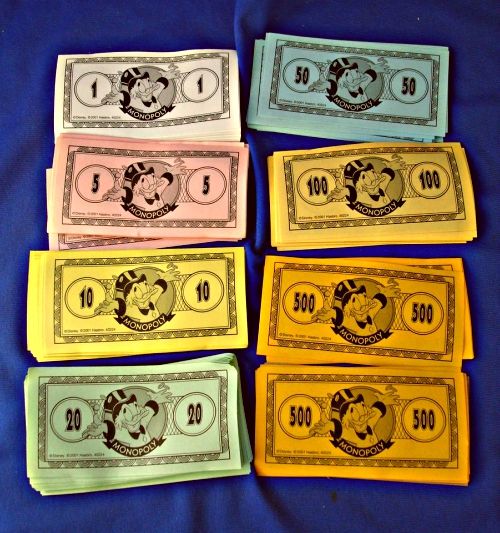
Play Money

Donald Trump is looking for a big win as he draws close to the end of his first 100 days in office. Healthcare reform has failed, Obamacare is very much still with us, and the smoke and mirrors of the new healthcare proposal doesn’t seem to be fooling anyone. The travel ban is held up in the courts, and looks like it will never happen. Even the stock market has not been cooperating lately. As I write this, Donald Trump’s biggest accomplishment has been putting Neil Gorsuch on the Supreme Court, and even that came with the asterisk known as the nuclear option. So Trump is pretty desperate for a legislative win, and he thinks he can get it with tax reform. “Tax reform”, of course, is a euphemism for a massive tax cut for the rich. George W Bush had relatively little trouble getting Congress to approve his tax cuts, but they were set to expire in ten years, making it relatively easy for Obama to get rid of them when the time came. Now, Trump and his enablers in Congress want to avoid that problem by making the new tax cuts permanent. That, fortunately, is harder to do.

The reason for that is something called the Byrd Rule. Approved in 1985 and amended into its current form five years later, the Rule allows anyone in the Senate to object to any legislation on the grounds that it increases the deficit for a period longer than ten years. The objection can only be overcome by a 60 vote majority, which means at the moment that Trump would need to find six Democrats to join him while keeping all of the Republicans on board. So far, this has proven impossible on any issue. His other choice is to get passed into law measures which would offset the impact of his tax cuts on the budget, and he was hoping to do this with massive cuts to healthcare. Now, however, we are starting to hear noise about something called “dynamic scoring”.

Dynamic scoring is the pretext for tax cuts for the wealthy in the first place. You sell the idea to voters based on the ridiculous idea that the stimulus these tax cuts will provide to the economy will be so powerful that they will actually reduce the deficit. That is, a sharp drop in federal revenues will magically result in the government taking in more funds than it spends. I explained a couple of weeks ago why this idea is doomed to fail. Paul Krugman, when he talks about this, refers to what he calls “the confidence fairy”. But this is not simply an argument about competing theories. Tax cuts like these have been tried before, and we don’t have to guess what will happen when recent history tells us. I mentioned that Bush passed his temporary tax cuts. The deficit exploded. As should have been obvious, when the government took in a lot less money, it wound up owing more. Fans of dynamic scoring will point out that Bush then engaged in two costly wars, and they will try to claim that, without those wars, the Bush tax cuts would have worked as advertised. OK. Suppose we take them at their word. Are they willing to end all US involvement in Iraq and Afghanistan, and pledge to not take any military action anywhere in the world, in the fight against terrorism or for any other reason, to pay for their tax cuts? Do they expect to convince us that they could keep such a pledge with this president in office? Barring such a pledge, we have every reason to expect that paying for Trump tax cuts with dynamic scoring would lead to a repeat of the Bush deficit explosion. Keep in mind as well that we should have expected the jump in military spending from the Bush wars to stimulate the economy, but instead we saw the weakest recovery from any US recession since World War II. So let’s score dynamic scoring, and give it the failing grade it deserves. Let’s recognize that tax cuts are a form of government spending, and insist that they can not be paid for with play money. Let’s force Trump and his friends to explain what cuts they will make to coddle the rich, and see if they can sell them to the voters.

Tonight’s song is one I had not heard before tonight. I stumbled upon it quite by accident, but its tribute to government in dementia seems fitting:

Monday, April 3, 2017

The Emperor’s New Tax Cuts

The battle over health care has been won, at least for now, and we can savor that victory. But we must realize that the circumstances of that victory will not always apply to the next fight. Specifically, the next fight is supposed to be over “tax reform”, and this one will play out very differently. In the health care fight, the Freedom Caucus was dedicated to the repeal of the Affordable Care Act, and had no interest in replacing it. Their absolutism, combined with the pressure protestors put on vulnerable Republicans to do no harm, made it impossible to get through the House any plan that could not attract Democratic support. “Tax reform” is of course a euphemism for massive tax cuts for the rich, and this one will play out differently. Here, our greatest help may come from Grover Norquist, but that won’t prevent a harmful bill from passing both houses of Congress.

The Republicans are bound by a rule that says no permanent tax cuts can be enacted unless the measure is revenue neutral. Instead, any measure which raises the deficit must be temporary, lasting only ten years. The Bush tax cuts were enacted this way, which is how Obama was able to get rid of parts of them when they expired. To pass the permanent tax cuts for the rich that Trump wants, the bill must contain offsets that would save the government enough money to pay for them. Shady accounting will only cover so much of this, and the Republicans were hoping to use the savings realized through savage cuts to healthcare to pay for the rest. So now they will attempt to craft a bill which raises taxes through measures like the border tax to offset permanent cuts for the rich and corporations. This is where Grover Norquist comes in. Norquist is the founder and president of Americans for Tax Reform, and he has extracted a pledge from most Republican lawmakers to never raise taxes for any reason. This pledge was the reason why the Bush cuts were temporary, and that is probably what will happen again if we lose this fight. Absolutists among the Republicans will prevent any measure which would increase taxes on anyone to offset cuts for the rich. That will still leave us with a measure that will do great harm. We can and must do better, which means we must change the national conversation on taxes.

I have never taken a single course on economics. Instead, I learned what I know by reading first Paul Krugman in the New York Times, and then later other writers as well. So I don’t have all of the detailed analyses others might be aware of, and I can’t put precise numbers to my statements. But I can apply common sense more easily than some people precisely because I don’t have the formal training. Some economists, it seems to me, come up with hair brained theories, and then devote themselves to “proving“ them. They make adjustments to these theories and “proofs” when facts don’t cooperate, but they are unable to back away and say the initial theory itself was the problem. A layman like me is sometimes to needed to show where they went wrong. I am thinking, of course, of the myth that tax cuts stimulate the economy and create jobs. It is only a myth, but it is also an assumption that dominates the national discussion on taxes, thanks in large part to Ronald Reagan. Reagan was not an economist either, but he was the one who succeeded in convincing American voters that tax cuts for “job creators” were needed to stimulate the economy. Reagan was forced to back pedal and raise taxes before economic growth could take hold, but he had already changed the national conversation before that happened. George W Bush never backed away from his tax cuts, and he presided over the weakest recovery since World War II, followed by the worst economic crisis since the Great Depression, but still the idea that tax cuts provide growth persists.

So what’s wrong with the idea anyway? It is seductive in its simplicity. Corporations are the ones who actually hire workers, so shouldn’t anything that helps them create jobs? Actually, that is the wrong question. The right questions are, what does a corporation do with its tax cuts, and why do companies hire? During the Obama presidency, we had a period where job growth was still sluggish, but companies were recording record profits and sitting on huge hordes of cash. Supply side economics tells us that this is impossible, that the economy should have been awash in jobs. Instead, in a process that is still underway, companies devoted a great deal of energy and imagination to figuring out what to do with all that cash. They mostly decided that it was not profitable to invest in hiring new workers. Instead, they could boost their stock prices by buying back shares of stock, a measure that does not do anything to create jobs. They also went on a binge of mergers and acquisitions, and that actually costs the economy jobs. Trump and the Republicans want to eliminate regulations, including ones that restrict a company’s ability to acquire other companies, so that will actually make things worse.

Why was it not profitable to hire new workers, and why did that change as the Obama administration continued? That relates to my second question, why do companies hire? Supply side economics is based on the idea that companies do not hire because they can’t afford to. Put like that, you can see the absurdity of it. I have already shown that companies do not hire just because they have the money to do so, not when they can make more money in other ways. Common sense should also tell you that it doesn’t make sense to hire workers to provide goods and services that no one can or will buy. And there is your answer. Companies hire because they believe that they can sell more stuff. Once you see that, you realize that companies may do the hiring, but they are not the job creators. We are, all of us. When you or I go to the store and spend $100 more than usual, we create jobs. When you or I use more medical care because Obama has made it more affordable, we create jobs. When you or I are able to take that Disney vacation we always wanted, we create jobs. It follows that the government can best create jobs by putting money in the hands of people who will spend it. That is not the rich. They don’t live from paycheck to paycheck, wishing they could buy more stuff. Instead, they put the money away, in stocks or in something riskier when stocks seem like a bad bet. Give another million dollars to the wealthy, and Goldman Sachs might need to hire one new broker. Give that same million dollars to poor people, by expanding food stamps or improving the Affordable Care Act, and McDonalds and Walmart between them might need ten new workers. Increasing the minimum wage is another way to boost spending, and it costs the government nothing. Universal Healthcare would make hiring new workers more profitable, and also boost spending and the consumption of healthcare.

So there is our assignment. To win the fight over tax cuts, we must change the national discussion. We must help people and lawmakers understand where jobs really come from. We must find personal stories wherever possible to make our points. We must help the American people understand who the real job creators are, and give them back their power.

I’m using the song this week as a tribute to the power of magical thinking. On a personal note, Pippin, which opened this way, was the first show I ever saw on Broadway. The entire show was a masterful display of the magic of the stage and its ability to create powerful illusions.